


Page 6 - ตัวอย่าง Science Solution 1
P. 6
From the figures of cells that you have studied, how are they similar or different from each other?
            Which of the cells do not consist of a nucleus?
            Which of the cells contain chloroplast?
            Which of the cells are plant cells and how to find out?
            Which of the cells create their own food and how to find out?
            Which of the cells have tails and what is the purpose of the tails?
            Which of the cells have hair around and what is the purpose of the hair?
            The figures of cells that you have studied show cells in different sizes and shapes. Some
            of them have tails, some of them have chlorophyll, and some of them have hair around.
            What is the purpose of these characteristics?
            Summarise the result.


                 Studying organism cells allows learning about the differences in sizes, shapes, and
          characteristics of cells that support the existences of the cells. Besides, some cells are found to be visible to
          human eyes, e.g. chicken egg cells, duck egg cells, turtle egg cells, and ostrich egg cells, which are
          huge cells, and some are not visible to human eyes, e.g. mammal egg cells, sperms, euglenas, and
          paramecium. Within the cells that you have studied and found to be visible to human eyes, what are their
          exterior and interior characteristics?


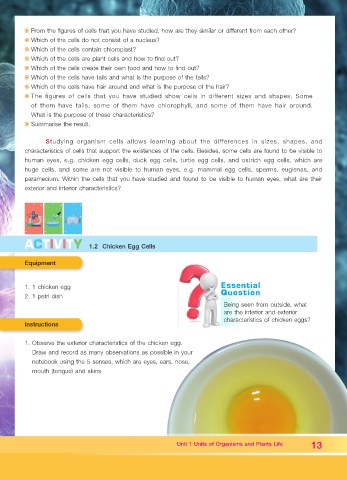
                                1.2  Chicken Egg Cells

          Equipment


          1. 1 chicken egg
          2. 1 petri dish
                                                                              Being seen from outside, what
                                                                              are the interior and exterior
          Instructions                                                        characteristics of chicken eggs?


          1. Observe the exterior characteristics of the chicken egg.
            Draw and record as many observations as possible in your
            notebook using the 5 senses, which are eyes, ears, nose,
            mouth (tongue) and skins.


                                                              Unit 1 Units of Organisms and Plants Life     13

